Bridgewater is a private security consultancy for manufacturers and distributors. We audit every point where custody of your product changes hands, identify where the loss is actually occurring, and rebuild the process so it cannot happen the same way twice.
Verisk CargoNet · Overhaul, 2025
Companies respond to a stolen load by adding cameras, locks, and GPS. Then it happens again. The reason is simple. Organized freight crews are not defeating your physical security. They are using your process exactly as it was designed, at the one point where nobody verifies anything.
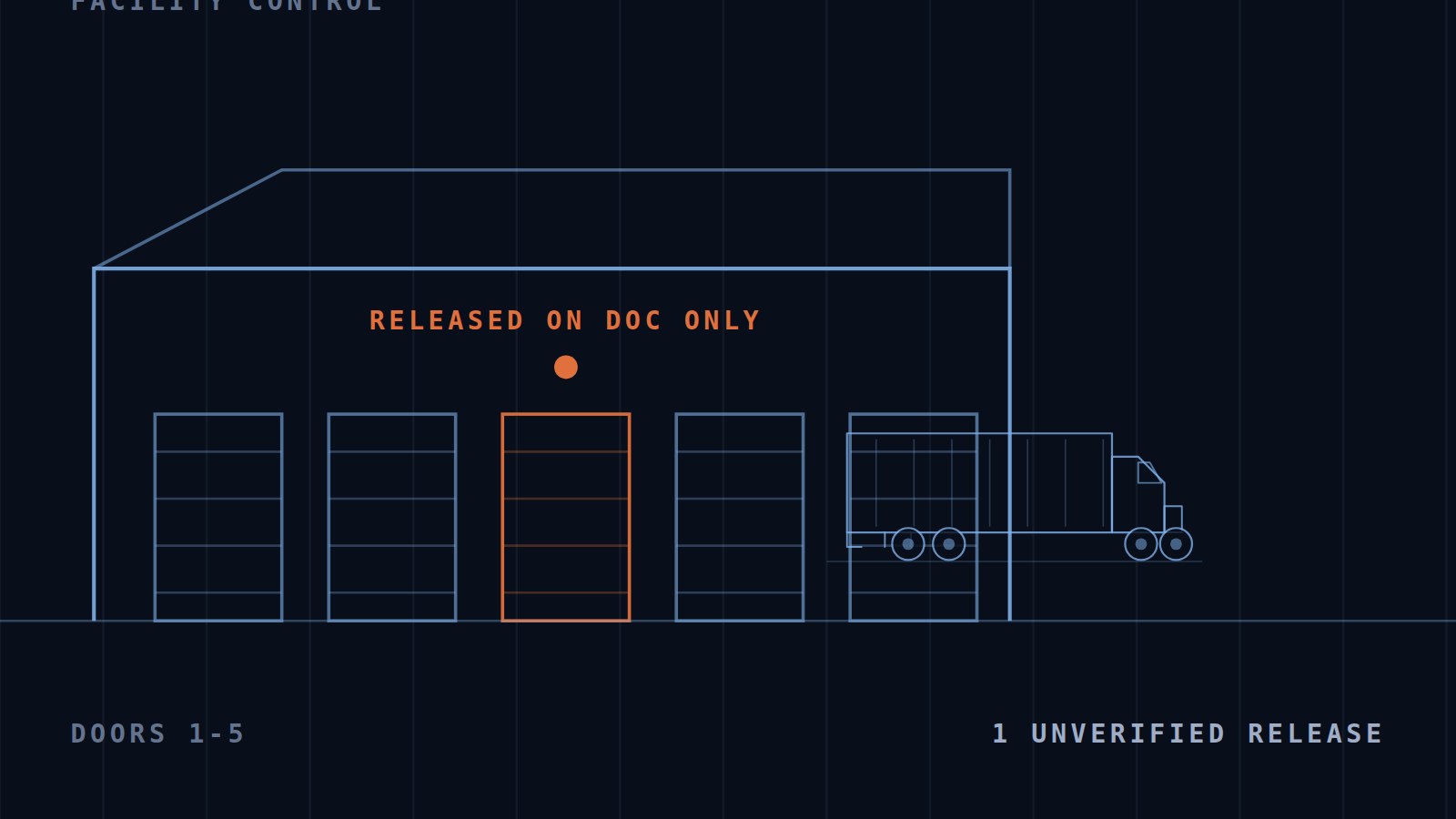
A load tendered to a carrier nobody called to confirm. A warehouse that releases on a bill of lading number anyone can obtain. A pickup window when the only person who could challenge the driver has gone home. Every one of these is a decision someone made for good operational reasons, and every one of them is a door.
We find the doors. Then we close them without slowing your freight down.
The value of an average theft event has climbed 46 percent in two years. That is the difference between a loss your finance team absorbs quietly and one that shows up in the quarter.
One stolen load is no longer a nuisance line item. The average event in 2025 cost more than a quarter of a million dollars, a 36 percent jump in twelve months.
| Year | Average loss per event |
|---|---|
| 2023 | $187,895 |
| 2024 | $202,364 |
| 2025 | $273,990 |
Verisk CargoNet
Drag or type your own numbers. Loss becomes a cost per load, which is the figure that can sit next to freight rate and packaging when you argue for a fix.
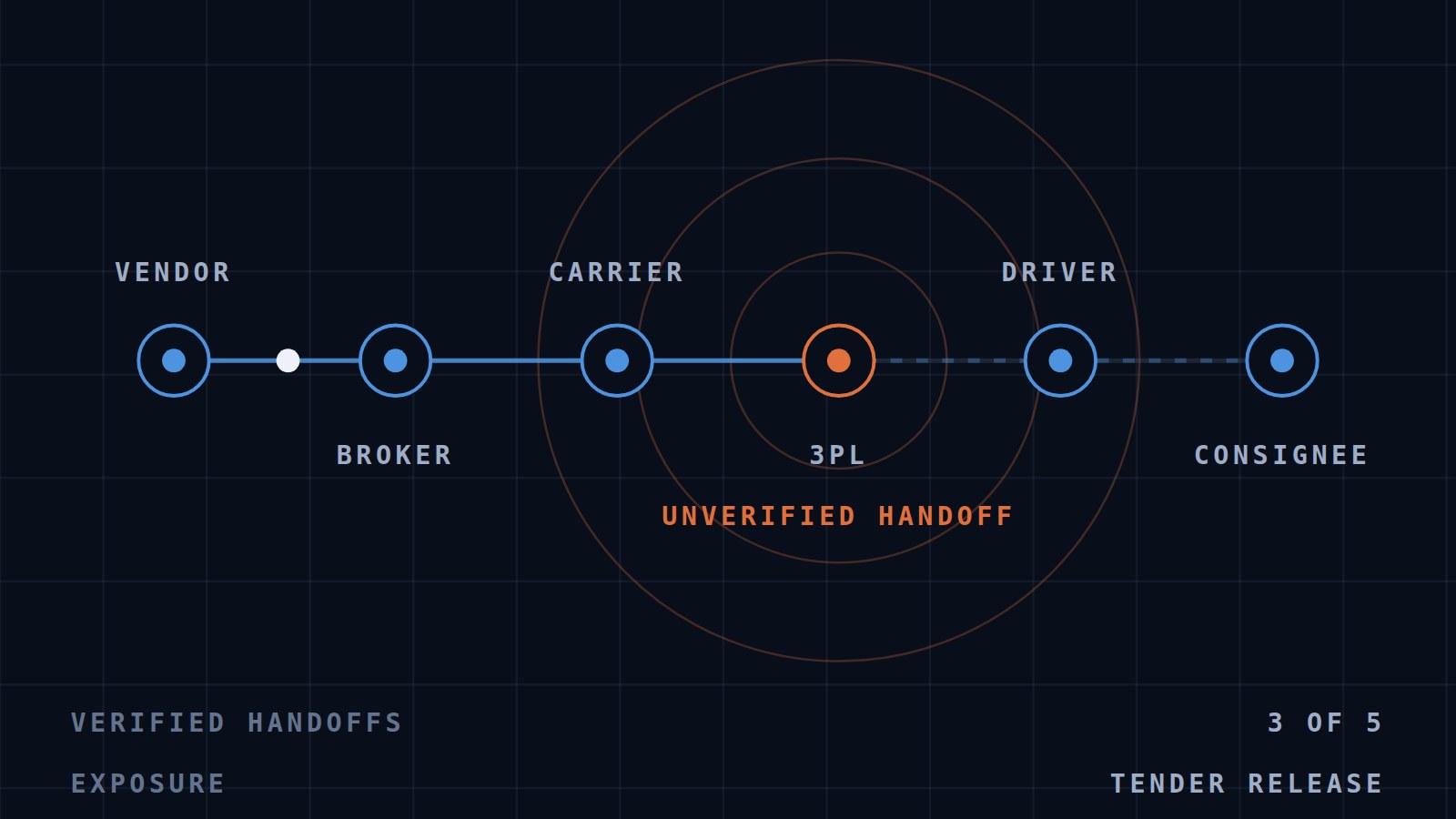
Product moves through a chain of hands from raw material to final delivery. A single unverified handoff anywhere in that chain is enough. We work the entire chain, not the piece that is easiest to look at.
Your exposure starts before the product exists. We audit the suppliers, the paperwork, and the people who control your inbound.
Most freight never gets stolen off a truck. It gets handed to the wrong one. We rebuild how loads are tendered and to whom.
Product sitting still is product at risk. We audit custody, counts, and access at every facility that touches your inventory.
From the moment the seal goes on to the moment the consignee signs. We close the gaps in the middle.
The hardest losses to find are the ones with a badge behind them. We audit the internal side without disrupting your floor.
When a load is gone, the first 48 hours decide everything. We run the response and pursue recovery of the product.
Every engagement follows the same discipline, whether we are auditing a single facility or an entire national network.
We document every handoff from vendor to consignee, in the order it actually happens rather than the order the SOP claims. This includes the informal workarounds your team uses to keep freight moving, because that is usually where the exposure lives.
We stress each verification point the way an experienced crew would approach it. What can be obtained without authorization, what can be requested by phone, what gets released on a document alone, and who is empowered to say no.
You receive a written assessment ranking every gap by exposure and cost to close, followed by rewritten procedures, verification scripts, and vendor requirements your team can implement immediately.
We return to confirm the new controls survived contact with real operations, retrain where they did not, and remain available for loss response if an incident occurs.
Every part of the process is monitored in person, step by step. Not a questionnaire, not a policy review, not a phone call with your operations manager. A process does not fail on paper. It fails at the moment it is executed, and the only way to see how it actually executes is to be standing there when it does.
What people do when they know they are being watched is useful. What they do the rest of the time is what we are actually there to learn, which is why observation runs across shifts rather than during a scheduled window.
Our founder also builds FleetGen.ai, a carrier verification and load monitoring platform used by freight brokers. Consulting clients get the benefit of both. What an audit uncovers on your dock informs the product, and what the platform detects across thousands of shipments informs the next audit.
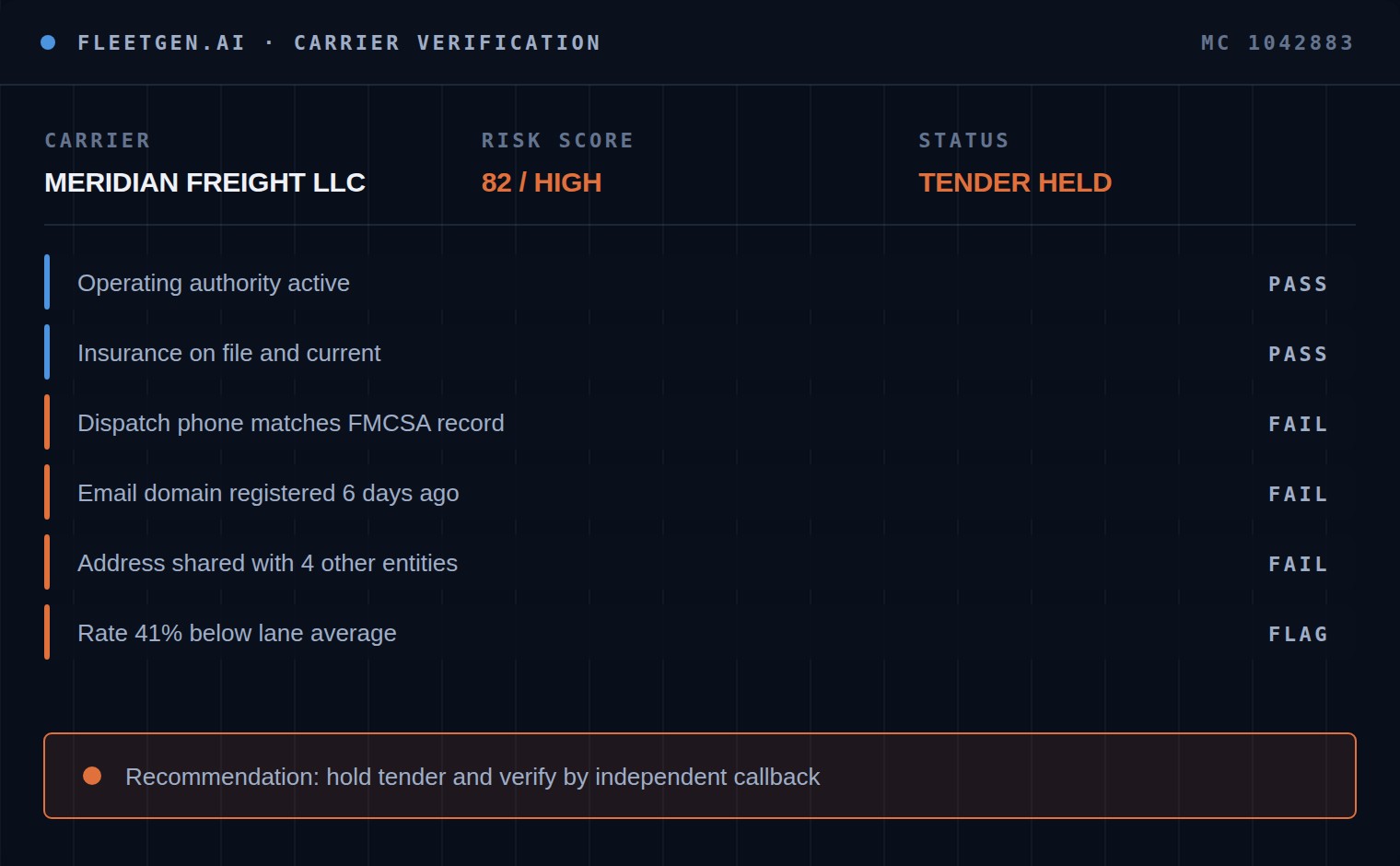
FleetGen scores a carrier against the signals that actually predict a fraudulent tender. Authority and insurance status, whether the dispatch phone matches the FMCSA record, how recently the email domain was registered, how many other entities share the address, and whether the rate makes commercial sense on that lane.
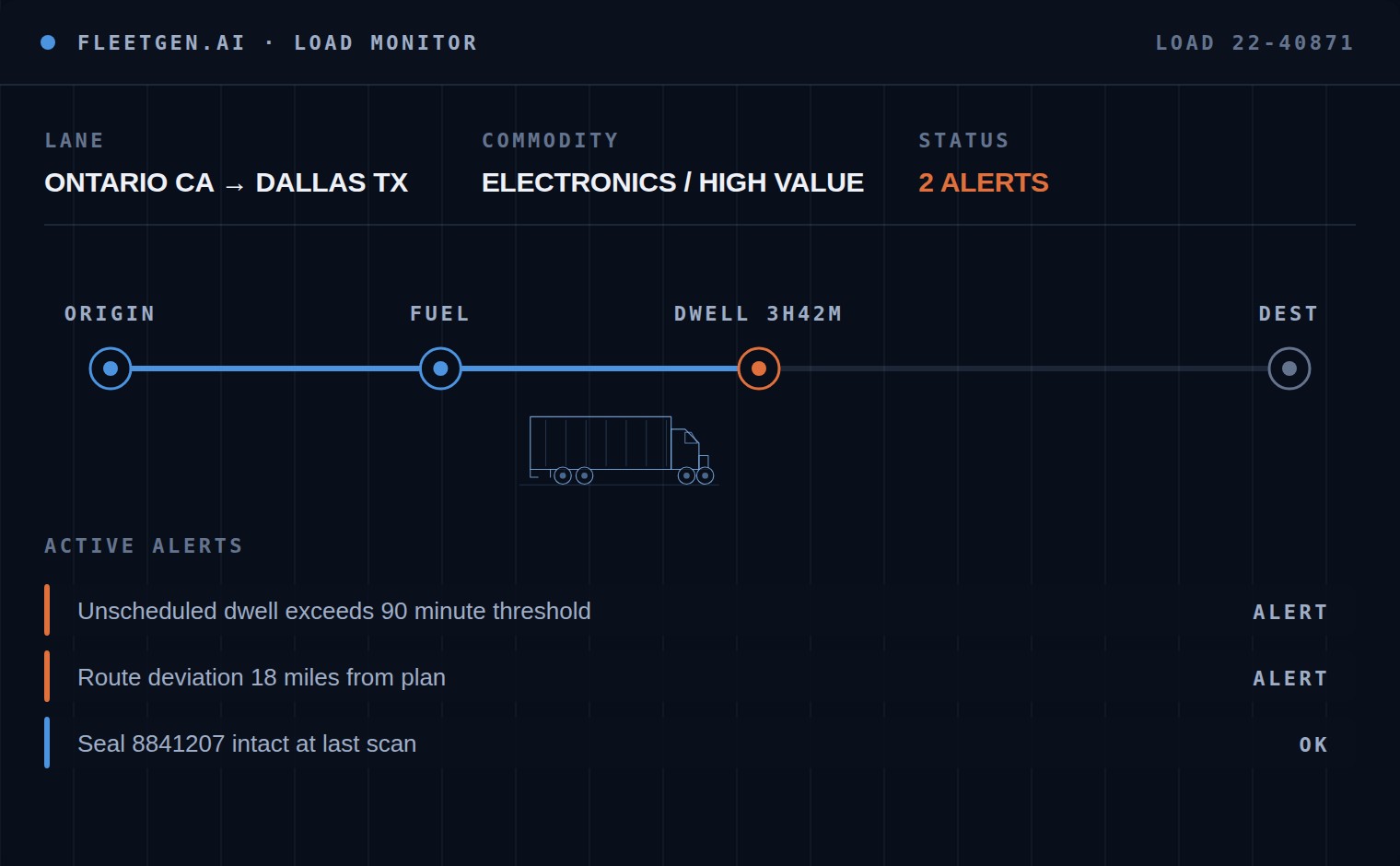
Live tracking, seal status, and proof of delivery in one record, with alerts tied to the conditions that precede a loss rather than the ones that follow it. Unscheduled dwell past a threshold. Route deviation. A stop that was not on the plan.
We work alongside local and federal law enforcement across the country. An investigation moves at the speed of the information it is handed, and most companies hand over a claim form. We hand over a reconstructed timeline, the parties who touched the freight, the documents that authorized the release, and wherever possible, where the product has surfaced.
That last part is where our network matters. Stolen product has to be sold, and it is sold through channels that the people inside those channels recognize immediately. We maintain relationships with hundreds of wholesalers, distributors, and buyers nationwide. When your product appears, we usually hear about it, and we can often identify which market it is moving through and at what price.
Audits happen on the dock, in the yard, and inside the dispatch office. Not in a conference room reviewing a policy binder.

Founder and Principal Consultant
Heesham built his career in wholesale distribution, managing supply relationships responsible for more than $100 million in downstream retail sales. In that work he identified inventory that had been compromised upstream and traced how it had entered legitimate distribution, an experience that reshaped how he views custody and verification at every stage of a supply chain.
He now also builds technology addressing the same problem at FleetGen.ai, and brings a network of hundreds of wholesalers and distributors across North America to recovery work.
A chain-of-custody audit takes two to four weeks and ends with a written report you can act on immediately. Initial consultations are complimentary and confidential.